An engine block is the main structural casting in an internal-combustion engine. It holds the cylinders, crankshaft supports, oil passages, coolant jackets, and many threaded mounting points. When a vehicle develops low compression, coolant loss, or a deep knocking noise, understanding the engine block helps you separate a repairable problem from a replacement decision.
The block is usually made from cast iron or aluminum alloy. Cast iron handles heat and cylinder wear well, while aluminum reduces weight and often uses pressed-in iron cylinder liners. A modern block is not just a hollow shell. Its dimensions control crankshaft alignment, piston clearance, head-gasket sealing, and oil pressure. A few thousandths of an inch can determine whether an engine runs for another 100,000 miles or fails shortly after a rebuild.
What the engine block contains
The cylinder bores are the round surfaces where pistons travel. They must remain straight, smooth, and correctly sized. Wear often creates a ridge near the top of the bore because the piston rings do not travel fully into that area. A machine shop can measure the bore with a dial-bore gauge and determine whether honing is enough or whether boring and oversized pistons are required.
Below the cylinders, the crankcase surrounds the crankshaft and connecting rods. Main bearing saddles support the crankshaft, while threaded holes secure the main caps. On many engines, those caps are machined with the block as a matched assembly, so their positions and direction matter during reassembly. Marking parts before disassembly is not optional; swapping caps can create alignment and bearing-clearance problems.
Oil galleries carry pressurized oil from the pump to the main bearings, connecting-rod bearings, camshaft journals, and, on some engines, turbocharger plumbing. Coolant passages surround the cylinders and carry heat to the cylinder head and radiator. Freeze plugs, core plugs, and threaded gallery plugs close manufacturing openings. A leaking plug can imitate a more serious failure, but corrosion around a plug often means the cooling system needs a complete inspection.
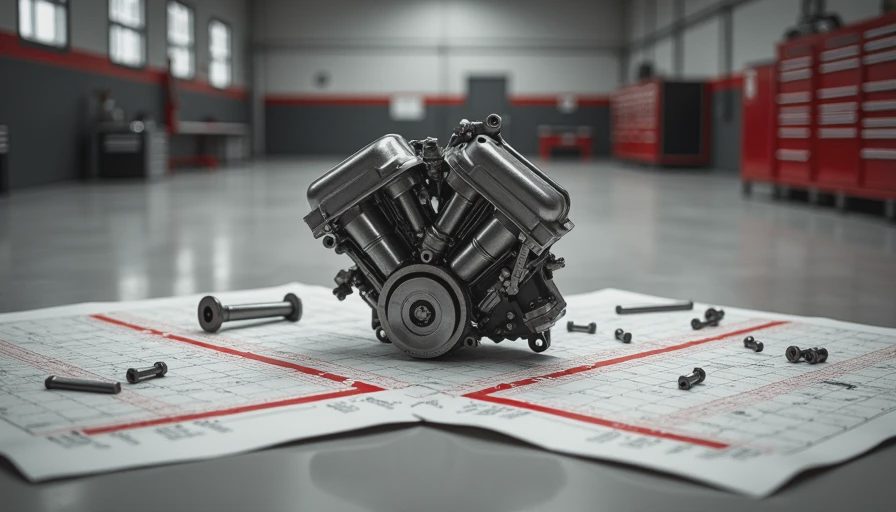
Common engine block failure signs
A cracked engine block can produce white exhaust smoke, unexplained coolant loss, oil contamination, or bubbles in the coolant reservoir. None of those signs proves a cracked casting by itself. A failed head gasket, warped cylinder head, intake gasket, or external hose can create similar symptoms. Start with a cooling-system pressure test, combustion-gas test, compression test, and leak-down test rather than guessing.
A block crack may appear in the cylinder wall, lifter valley, main web, or deck surface. Overheating is a common cause, especially when coolant level drops and the driver continues running the engine. Severe freezing with an improperly protected cooling system can also split a water jacket. Some cracks are visible with the cylinder head removed; others require magnetic-particle testing, dye penetrant, or hot-tank cleaning at a machine shop.
A damaged deck surface can prevent a head gasket from sealing. Use a machinist straightedge and feeler gauges to check flatness, following the service manual’s measuring points and maximum-warp specification. Do not remove material casually. Excessive resurfacing changes compression ratio, cam timing on some overhead-cam engines, and the relationship between pistons and valves.
How to inspect an engine block at home
Begin by recording the engine code, mileage, symptoms, and any diagnostic trouble codes. Drain the oil into a clean pan and inspect it under bright light. Metallic glitter, copper-colored bearing material, or coolant droplets provide useful clues. Cut open the oil filter if a bearing or valvetrain failure is suspected, but wear gloves and keep debris samples labeled.
With the engine accessible, inspect for external leaks around the oil pan, rear main seal area, freeze plugs, timing-cover joints, and head gasket line. Clean the area first; an oily surface can hide the original leak path. A cooling-system pressure tester can reveal a slow leak without running the engine. Never exceed the pressure printed on the radiator cap or specified by the manufacturer.
For internal diagnosis, test compression on a warm engine with the throttle held open, then compare cylinders. A low cylinder that improves substantially after adding a small amount of oil points toward ring or bore wear. A cylinder that stays low may have a valve, head-gasket, or block problem. A leak-down tester identifies where air escapes: the intake, exhaust, crankcase, or cooling system.

Repair, machine work, or replacement?
A usable block can often be cleaned, measured, honed, and reused. A typical machine-shop inspection may cost roughly $100 to $300, while cleaning, boring, decking, and align-honing can push the work into the $800 to $2,000 range before parts and labor. Prices depend on engine size, damage, local labor rates, and whether specialized sleeves or welding are needed.
A cracked cylinder can sometimes receive a sleeve. A damaged deck may be welded and machined, but the repair requires an experienced shop and careful heat control. Main-web damage, extensive freeze damage, or severe distortion often makes replacement more practical. Used long blocks can cost several hundred dollars, while remanufactured assemblies commonly run from about $2,000 to well above $5,000 before installation.
Do not compare only the purchase price. A used assembly with unknown mileage may need seals, timing components, plugs, and testing. A remanufactured unit may include a warranty but still require correct break-in oil, external sensors, and transferred accessories. Add the cost of gaskets, bolts, fluids, machine work, and downtime before choosing.
Rebuilding an engine block correctly
Disassembly starts with photographs, labeled bags, and a clean workbench. Keep each piston and connecting rod associated with its original cylinder unless the machine shop directs otherwise. Measure crankshaft journals with a micrometer, inspect bearing shells for uneven wear, and check crankshaft endplay with a dial indicator. Plastigage can provide a quick clearance check, but precision micrometers and bore gauges are better for a full rebuild.
After machining, wash the block with hot soapy water until a white towel stays clean when wiped through the oil galleries. Abrasive honing residue left inside the block can destroy new bearings quickly. Install gallery plugs, freeze plugs, bearings, and pistons using the exact orientation specified for that engine. Torque main caps, connecting-rod bolts, and cylinder-head fasteners in the published sequence and specification; never substitute a generic torque value.
Before first start, prime the oiling system, verify crankshaft rotation by hand, fill the cooling system correctly, and confirm that fuel and ignition timing are controlled safely. Watch oil pressure, coolant temperature, and leaks during the initial run. A rebuilt engine block deserves measured checks, not a long idle while you hope the warning signs disappear.
Questions to answer before spending money
Ask whether the casting has been measured, pressure-tested, and checked for cracks. Ask for bore diameter, taper, out-of-round readings, deck flatness, crankshaft journal measurements, and the final bearing clearances. If a shop cannot explain what it measured, the invoice is not enough evidence that the block is ready.
Also identify why the original engine failed. A replacement will suffer the same fate if a clogged radiator, failed oil pump, lean fuel condition, broken timing component, or contaminated cooling system remains unresolved. For a high-mileage vehicle, compare the complete rebuild cost with a verified used engine and the vehicle’s actual market value. The right answer is the one supported by measurements, parts availability, and a realistic labor plan—not the cheapest casting in an online listing.





No comments yet — grab the first one.