The Problem
The 4L60E is one of the most common automatic transmissions ever built. It's been in millions of GM trucks, SUVs, and cars from the early 1990s through the 2010s. It's also one of the most frequently diagnosed transmissions — and one of the most frequently misdiagnosed.
You pull a code. The scanner tells you something technical. But what does that code actually mean in the real world — on a 2005 Silverado with 180,000 miles that's been used to tow a boat for 15 years?
Here's the disconnect: The scanner tells you what the computer thinks is wrong. The real world tells you what actually broke. Often, they're not the same thing.
This entry bridges that gap. For each common 4L60E code, we'll tell you:
What the scanner says (the technical definition)
What that means in your garage (the real symptom)
What actually causes it (the root problem)
What to fix first (the smart diagnostic path)
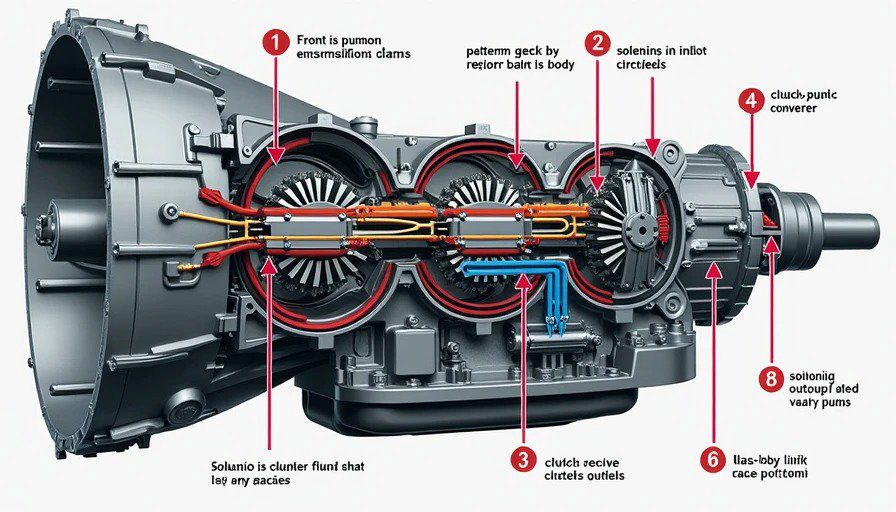
How the 4L60E Works — The 30-Second Version
Before we get into codes, you need a super-quick mental model:
Component | What It Does | Where It Fails |
|---|---|---|
Solenoids (1-2, 2-3, TCC) | Controlled by the PCM to direct fluid flow for gear shifts | Clogged, sticking, or electrically failed |
Valve body | The hydraulic "brain" that routes fluid based on solenoid commands | Worn bores, stuck valves, debris damage |
Pressure control solenoid (PCS) | Regulates line pressure | Fails causing soft shifts or harsh engagement |
Torque converter clutch (TCC) | Locks the converter for fuel economy at highway speed | Worn clutch material, stuck on/off |
Input speed sensor (ISS) / Output speed sensor (OSS) | Tell the PCM how fast the input and output shafts are turning | Intermittent signal, failed sensor, wiring damage |
Front pump | Provides hydraulic pressure to everything | Worn, causing low pressure and slipping |
Internal hard parts | Clutches, bands, planetary gearsets | Worn friction material, broken parts |
The most important thing to know: The PCM doesn't know why a shift is bad. It only knows that the input and output speeds don't match the expected ratio. So a P0730 (incorrect gear ratio) could be caused by a failed solenoid, a worn clutch, a leaking seal, or even low fluid. The code doesn't tell you which one. You have to diagnose.
Code: P1870 — Transmission Component Slipping
Scanner Definition | Real-World Meaning |
|---|---|
"Transmission Component Slipping" | The torque converter clutch (TCC) isn't locking up properly |
What the PCM Sees | What You Feel |
|---|---|
TCC is commanded on (lockup). Engine RPM drops less than expected. PCM interprets this as internal transmission slippage. | Harsh 1-2 shift, delayed engagement, transmission feels "confused" at highway speed. May feel like the converter is "hunting" (locking and unlocking). |
What Actually Causes It
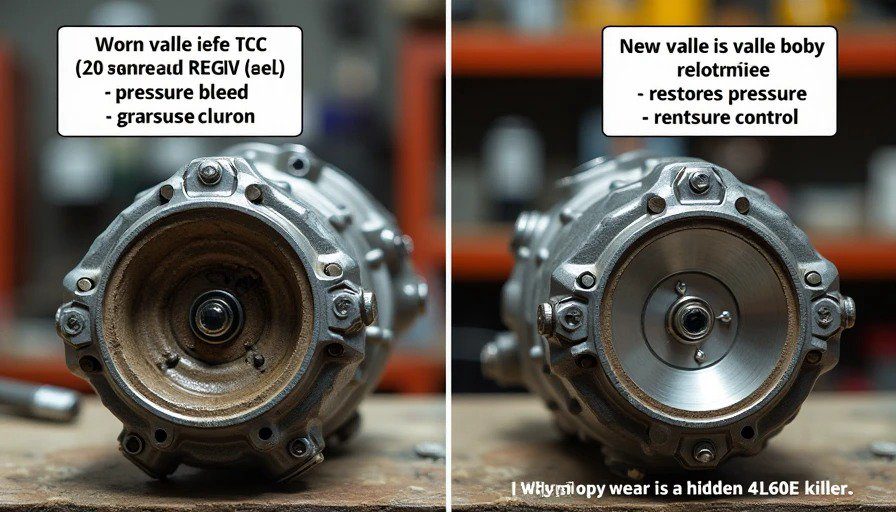
The real culprit is almost always the torque converter clutch. The TCC applies hydraulic pressure to lock the converter. Over time, the clutch material wears, the valve body bore that controls TCC pressure wears, or the TCC solenoid starts sticking.
But here's the thing: P1870 is often a false code. The PCM thinks the transmission is slipping because the TCC isn't locking up fast enough. But the transmission itself might be fine. The problem is the converter or the valve body.
Diagnostic Path
Check fluid level and condition. Low fluid or burnt fluid will cause TCC issues. If the fluid is dark and smells burnt, you have internal damage.
Check TCC solenoid function. Test resistance (typically 10-15 ohms). If it's out of spec, replace it.
Check TCC operation with a scanner. Command TCC lockup at highway speed (55+ mph). Does the engine RPM drop by ~200-400 RPM? If not, the TCC isn't locking.
If the TCC solenoid and fluid check out, the problem is likely the valve body bore wear (common on high-mileage 4L60Es) or the converter itself.
Fix It First
Fluid and filter change — start here if the fluid is old but not burnt.
TCC solenoid replacement — cheap and easy (drop the pan, change the solenoid, refill).
Valve body rebuild or replacement — if the solenoid and fluid don't fix it, the valve body is the next suspect.
Torque converter replacement — if the valve body doesn't fix it, the converter clutch is likely worn. This requires transmission removal.
Pro tip: P1870 is one of the most common 4L60E codes. On high-mileage trucks, a new valve body and TCC solenoid solve it 70% of the time. If that doesn't fix it, the transmission is coming out for a converter.
Code: P0756 — Shift Solenoid B (2-3) Performance / Stuck Off
Scanner Definition | Real-World Meaning |
|---|---|
"Shift Solenoid B Performance / Stuck Off" | The 2-3 shift solenoid isn't working properly |
What the PCM Sees | What You Feel |
|---|---|
The PCM commands the 2-3 shift. The input/output speed ratios don't change as expected. | No 2-3 shift. The transmission stays in 2nd gear. The engine revs high. You might also get harsh shifting between 1st and 2nd. |
What Actually Causes It
Clogged solenoid filter — debris in the transmission fluid blocks the solenoid's screen.
Failed solenoid (electrical) — the solenoid has high resistance or is shorted.
Valve body issues — the valve that the solenoid controls is stuck.
Wiring issues — broken or corroded wire between the PCM and the solenoid.
Diagnostic Path
Check transmission fluid. Low or burnt fluid is the first thing to rule out.
Check solenoid resistance. The 2-3 solenoid should read 20-30 ohms. If it's out of spec, replace it.
Check for power and ground at the solenoid connector — if there's no signal, the wiring or PCM is the problem.
If the solenoid tests good, the valve body may have a stuck valve. Debris or wear can cause the valve to bind.
Fix It First
Fluid and filter change — debris can clog the solenoid screen.
Solenoid replacement — if you're dropping the pan, it's a $30 part and takes 5 minutes. Worth replacing proactively.
Valve body cleaning or replacement — if the solenoid is fine, the valve body is the next suspect. A stuck valve can sometimes be freed with a cleaning, but on high-mileage transmissions, replacement is more reliable.
Pro tip: Dropping the pan on a 4L60E is a messy job but not difficult. If you're in there for any reason, replace all the solenoids (1-2, 2-3, TCC, and PCS) at the same time. They're cheap and you'll save yourself from dropping the pan again next month.
Code: P0730 — Incorrect Gear Ratio
Scanner Definition | Real-World Meaning |
|---|---|
"Incorrect Gear Ratio" | The transmission's mechanical ratio doesn't match what the PCM expected for the commanded gear |
What the PCM Sees | What You Feel |
|---|---|
The PCM commands 3rd gear. It reads the input and output speed sensors. The calculated ratio doesn't match the expected 1:1 (or 1.5:1, or whatever it should be). | Slipping, banging shifts, or no engagement. You might feel the engine rev but the car barely moves. Or it might slam into gear. |
What Actually Causes It
This is the "I have no idea what's wrong" code. It means the PCM is confused because the transmission isn't doing what it expects.
Causes can include:
Low fluid level — the most common cause and the first thing to check
Worn clutches or bands — the friction material is gone, so the transmission can't hold the gear
Sticking solenoid or valve — the hydraulic path isn't being opened or closed properly
Failed input or output speed sensor — the PCM doesn't know what speed the transmission is actually spinning
Internal mechanical failure — broken planetary gears, sprag, or other hard parts
Diagnostic Path
Check fluid level and condition. Low fluid = slipping. Burnt fluid = internal damage. Do this before anything else.
Check speed sensors (ISS and OSS). Test resistance and verify they're sending a signal to the PCM. If one is dead, the PCM can't calculate ratios.
Check for other codes. P0730 often appears with other codes (like P0756 or P1870). That can point you to the root cause.
Test line pressure. If pressure is low, the transmission can't hold a gear. Low pressure is often caused by a worn pump or a stuck pressure control solenoid.
Fix It First
Add transmission fluid — if it's low, top it up and see if the code clears.
Replace speed sensors — if one is dead, it's a cheap fix (under $50).
If fluid is burnt or low pressure is confirmed, the transmission needs a rebuild. This code often means internal damage.
Pro tip: P0730 is the "I need to prepare for a rebuild" code. If you have this and the fluid is burnt, start shopping for a transmission shop. If the fluid is clean and full, it might be a sensor or solenoid. But if the fluid is dark, the clutches are gone.
Code: P0741 — Torque Converter Clutch (TCC) Solenoid / Circuit Performance / Stuck Off
Scanner Definition | Real-World Meaning |
|---|---|
"TCC Solenoid / Circuit Performance / Stuck Off" | The TCC isn't locking up when commanded |
What the PCM Sees | What You Feel |
|---|---|
PCM commands TCC lockup. RPM doesn't drop. PCM knows the TCC isn't locking. | No TCC lockup at highway speed. Engine RPM stays high. Fuel economy suffers. You might also get a P1870 alongside this code. |
What Actually Causes It

TCC solenoid failure (electrical) — the solenoid coil is open or shorted
TCC solenoid stuck off — it's not getting power or the valve is stuck
Low line pressure — insufficient pressure to apply the clutch
Worn torque converter clutch — the clutch material is gone
Valve body bore wear — the TCC valve bore wears, causing pressure bleed-off
Diagnostic Path
Check TCC solenoid resistance. If it's open or shorted, replace it.
Check for power at the solenoid. If there's no power, check the wiring and PCM output.
Check line pressure. Low pressure prevents TCC engagement.
If all electrical and pressure checks pass, the converter clutch itself is likely worn.
Fix It First
Solenoid replacement — the cheapest and easiest first step.
Valve body rebuild — if the solenoid is fine, a worn TCC valve bore is a common cause.
Torque converter replacement — if the valve body doesn't fix it, the converter is coming out.
Pro tip: P0741 + P1870 together = almost always a bad torque converter. Replacing the converter (and flushing the cooler) fixes both codes 80% of the time.
Code: P0717 — Input Speed Sensor (ISS) No Signal
Scanner Definition | Real-World Meaning |
|---|---|
"Input Speed Sensor No Signal" | The PCM isn't seeing a reading from the input speed sensor |
What the PCM Sees | What You Feel |
|---|---|
The PCM looks for a signal from the ISS. There's no signal. The PCM defaults to "fail safe" mode. | Harsh shifts, no upshifts, the transmission is in limp mode. The transmission will stay in 2nd gear (or another fail-safe gear). You can't accelerate normally. |
What Actually Causes It
Failed ISS — the sensor itself has died
Wiring damage — the wire between the ISS and PCM is broken or shorted
Metal debris on the sensor — the sensor reads the reluctor wheel; metal shavings can interfere with the signal
Low fluid level — the sensor needs fluid to work
Diagnostic Path
Check fluid level. Low fluid can cause intermittent ISS signals.
Check resistance of the ISS. The sensor should measure 300-500 ohms (or similar — check your service manual). If it's open or shorted, replace it.
Check wiring. Check for continuity between the ISS connector and the PCM connector.
Check for debris. Remove the ISS and look for metal shavings on the tip. If you see significant debris, the transmission is likely failing internally.
Fix It First
Add transmission fluid — if it's low, top it up and clear the code.
Replace the ISS — it's accessible from the outside on most 4L60Es (on the driver's side, near the bellhousing). It's a cheap part.
Check and repair wiring — if the sensor tests good, the wire is likely the issue.
Pro tip: The ISS is a known failure point on the 4L60E. If you're having intermittent shifting issues and the code points to the ISS, replace it. It's a $20 part that takes 10 minutes. Even if it's not the root cause, it's a cheap step to eliminate.
Code: P1811 — Shift System Maximum Adapt / Long Shift
Scanner Definition | Real-World Meaning |
|---|---|
"Shift System Maximum Adapt / Long Shift" | The PCM has reached the maximum adaptation limit to compensate for a slow shift |
What the PCM Sees | What You Feel |
|---|---|
The PCM has been adding pressure to the shift solenoids over time to make shifts quicker. It's reached the maximum pressure it can add. | Long, delayed shifts, harsh engagement. You'll feel the transmission "thinking" before it shifts, or it will slam into gear. Usually worse when cold. |
What Actually Causes It
Worn pressure control solenoid (PCS) — the PCS controls line pressure. When it wears, it can't deliver enough pressure for quick shifts, so the PCM adapts by adding pressure. When it maxes out, you get a code.
Worn clutches — friction material wears, requiring more pressure and longer apply time
Low fluid level — the transmission can't build enough pressure
Clogged filter — restricted fluid flow reduces pressure
Diagnostic Path
Check fluid level and condition. Low or burnt fluid is a common cause.
Check PCS solenoid resistance. The PCS should read 3-6 ohms (depending on year). If it's out of spec, replace it.
Check line pressure. Low pressure at idle (below 60 psi) indicates a pump or PCS issue.
Check shift times with a scanner. If the 1-2 shift is taking more than 1.5 seconds, the transmission is slipping.
Fix It First
Fluid and filter change — often fixes P1811 if the transmission isn't too far gone.
Replace the PCS — a common fix for this code. The PCS is a $60 part and can be replaced with the pan off.
Valve body rebuild — if the PCS is fine, the valve body may be worn.
If the transmission is slipping (not just slow), start planning a rebuild.
Pro tip: P1811 often shows up after 100k miles. Replacing the PCS and doing a fluid/filter change solves it more often than not. If it doesn't, the clutches are worn and a rebuild is coming.
Quick Reference Table
Code | Scanner Definition | What You Actually Feel | Most Likely Cause |
|---|---|---|---|
P1870 | Transmission Component Slipping | Harsh 1-2 shift, no TCC lockup | TCC solenoid, valve body wear, or converter |
P0756 | 2-3 Shift Solenoid Performance | No 2-3 upshift, stuck in 2nd | Clogged solenoid filter or failed solenoid |
P0730 | Incorrect Gear Ratio | Slipping, banging, no engagement | Low fluid, worn clutches, or internal failure |
P0741 | TCC Solenoid Stuck Off | No TCC lockup, high RPM at highway speed | TCC solenoid or worn converter clutch |
P0717 | ISS No Signal | Harsh shifts, limp mode, no upshifts | Failed ISS, wiring, or debris |
P1811 | Shift System Max Adapt | Long, delayed shifts, harsh engagement | Worn PCS, low fluid, or worn clutches |
Common Pitfalls
🚫 Pitfall 1: Replacing the transmission for a solenoid
The 4L60E's solenoids are accessible through the pan (except the PCS, which is also accessible). Dropping the pan and replacing all solenoids costs under $200 in parts and takes a few hours. Replacing the transmission is $2,000+. Do the cheap stuff first.
🚫 Pitfall 2: Ignoring fluid condition
If the fluid is bright red and smells fine, the transmission is likely healthy. If the fluid is dark brown and smells burnt, the clutches are gone. No amount of solenoids or valve body work will fix a transmission that has burnt fluid. Check the fluid before anything else.
🚫 Pitfall 3: Not flushing the cooler
If you replace the transmission or torque converter, the cooler lines are filled with debris and old fluid. If you don't flush them, the debris will destroy your new parts. Always flush the cooler lines when replacing major components.
🚫 Pitfall 4: Using the wrong fluid
The 4L60E requires Dexron III or Dexron VI depending on the year. Using the wrong fluid can cause shifting issues and damage the transmission. Check your owner's manual or service information. Use the right fluid.
🚫 Pitfall 5: Over-torquing the pan bolts
The pan bolts are small and strip easily. Torque spec is typically 10-12 ft-lb. That's barely more than hand-tight. Use an inch-lb torque wrench (120-144 in-lb). Don't use a 3/8" drive ratchet to "gutentight" them.
🚫 Pitfall 6: Replacing the entire valve body unnecessarily
Before you buy a new valve body, check the solenoids and the wiring. A stuck solenoid or a broken wire is much cheaper to fix. Diagnose before you replace. A remanufactured valve body is $200-400, and a solenoid is $30-60.
🚫 Pitfall 7: Not checking the TCC lockup
TCC lockup is the most common overlooked issue on the 4L60E. If you have a P1870 or P0741, the TCC is the most likely culprit. Don't ignore the TCC. A bad TCC will cost you fuel economy and eventually overheat the transmission.
Contributors
Role | Username | Notes |
|---|---|---|
Primary Author | @transmission_dave | Based on 50+ 4L60E diagnostics across GM trucks and SUVs (1993-2013) |
Technical Reviewer | @gm_master_tech | Verified against GM service information and TSBs |
Fact Check | @rebuild_shop_owner | Owns a transmission rebuild shop, confirmed failure patterns |
Safety Review | @senior_editor_01 | No immediate safety concerns — but transmission failure can cause loss of drive |




No comments yet — grab the first one.