Dielectric grease gets treated like magic shop goo, but it has one job: keep moisture, salt, and road grime out of electrical connections without turning a good repair into a comeback. If you have ever fought a green trailer plug, a misfire from a wet coil boot, or a crusty headlight socket, dielectric grease is a cheap fix that belongs in the drawer next to your multimeter. A small tube from Permatex, CRC, or 3M usually costs about $5 to $12 and lasts a long time when you use it the right way.
What dielectric grease actually does
This is a silicone-based, non-conductive grease. That matters. It does not clean corrosion, and it does not replace a damaged terminal. What it does is fill air gaps, shed water, and slow down oxidation on parts that live in heat, spray, and vibration. On a connector that seals properly, the grease helps keep the rubber boot flexible and keeps road spray from creeping into the cavity.
Think of it as a weather barrier, not an electrical bandage. If a terminal is loose, burned, or bent back from overcrimping, the grease will not rescue it. Clean metal still has to meet clean metal with enough pressure to carry the load. That is why a good repair starts with inspection, not with squeezing a blob into the connector and hoping for the best.
Where it pays off is on parts that get opened, plugged, unplugged, and exposed to the elements. Spark plug boots, coil-on-plug boots, weather-pack connectors, trailer light plugs, bulb sockets, and some battery terminal covers all benefit from a thin coating in the right place. I have seen a $12 tube prevent a $150 pigtail swap more than once.
Where dielectric grease belongs
Use it on the rubber seal, the boot, and the outside of the connector face, not as a substitute for a solid mechanical connection. On spark plug boots, a thin film helps the boot slide on without tearing and makes the next removal less of a fight. On trailer connectors, it helps keep water and salt from living in the plug during winter and wash season. On battery service jobs, it can protect the exposed outside of the clamp after the connection is tightened.
The basic rule is simple: if the part needs sealing, lubrication, or moisture resistance, it is a candidate. If the part depends on exposed sliding metal-to-metal contact, treat it carefully and do not pack it full. A clean sealed connector with a light film is one thing. A terminal buried in a wad of grease is another. The first survives weather. The second creates guesswork.
How to apply dielectric grease
Start with a clean part. If the connector is dirty, spray it with electrical contact cleaner and let it dry. If there is heavy corrosion, fix that first with a brush, a terminal tool, or a replacement pigtail. A tube of grease is not a shortcut around bad hardware.
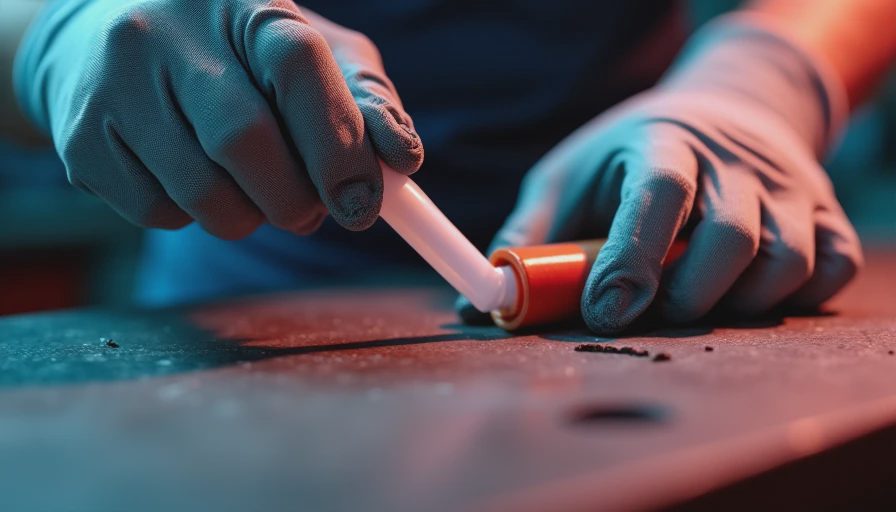
For a typical job, pull the boot or connector apart, inspect the pins, then apply a very thin film with a gloved finger, cotton swab, or small brush. You are aiming for enough to coat the sealing surfaces, not enough to squeeze out in globs. Reconnect the part firmly, then wipe away the excess that pushes out around the edge. On a battery terminal job, a 10 mm wrench, a nylon brush, and a rag are usually enough to get it done cleanly.
After the connection is back together, tug lightly on the harness, cycle the load, and make sure the fit is tight. If the connector wiggles or the terminal feels loose, stop there and repair the terminal. No amount of sealant fixes a bad grip.
Common mistakes that cause trouble
The most common mistake is overdoing it. People see grease and think more is better, but a packed connector can trap dirt, hide damage, and make diagnostics miserable the next time the circuit acts up. Another mistake is using it as a cleanup product. If the pin is already green, pitted, or burned, clean or replace it first.
Do not put it on parts that should stay dry and clean by design, like oxygen sensor tips, relay blades, or fuse contacts unless a manufacturer specifically calls for it. The sensing end of an oxygen sensor must be left alone. Same idea with switches and relays: if the contact path is exposed and relies on precise metal contact, grease can interfere.
Also, do not confuse a healthy connector seal with a dead connector body. If the rubber is split, the lock tab is broken, or the terminal is loose in the shell, the right fix is parts, not paste. A $15 to $40 pigtail is cheaper than chasing intermittent faults for a month.
Quick answers from the garage
Do you need it on spark plug boots? Usually yes, especially on boots that see heat and road spray. Do you need it on battery terminals? A light coat on the exposed outside after tightening is fine, but do not smear it between the mating metal surfaces. Is it the same as anti-seize? No. Anti-seize is a threaded fastener product; this one is for sealing and moisture control on electrical parts.
For most driveway repairs, dielectric grease is cheap insurance, not a miracle cure. Use it on parts that seal, keep the connection clean, and replace damaged hardware when the connector itself is worn out. If you are chasing an intermittent electrical problem, a clean inspection and a small tube on hand can save you from buying parts you did not need.





No comments yet — grab the first one.