Dead battery at 6 a.m. in a cold driveway? It happens to every driver eventually. Knowing how to jumpstart a car is one of those skills that costs nothing to learn and can save you a roadside assistance bill. Here is the exact process I use in my garage, from the tools to the order of connections, plus the mistakes that send people to the parts store for a replacement battery.
You need a working donor vehicle with a charged battery and a set of jumper cables. A 4-gauge cable set with 20 feet of reach is the sweet spot for most cars and costs around $30 to $60. Avoid cheap 8-gauge cables; they overheat during a hard crank. A lithium jump pack like the NOCO Boost Plus GB40 fits in a glove box and costs around $100 if you want to skip the donor car.
Before you connect anything, shut both engines off and set both parking brakes. Put the transmission in Park or Neutral. Route the cables carefully so they do not touch pulleys, belts, or fans. If the dead battery is swollen, cracked, or leaking fluid, skip the jump and replace the battery.
Why the Order of Jumper Cable Connections Matters
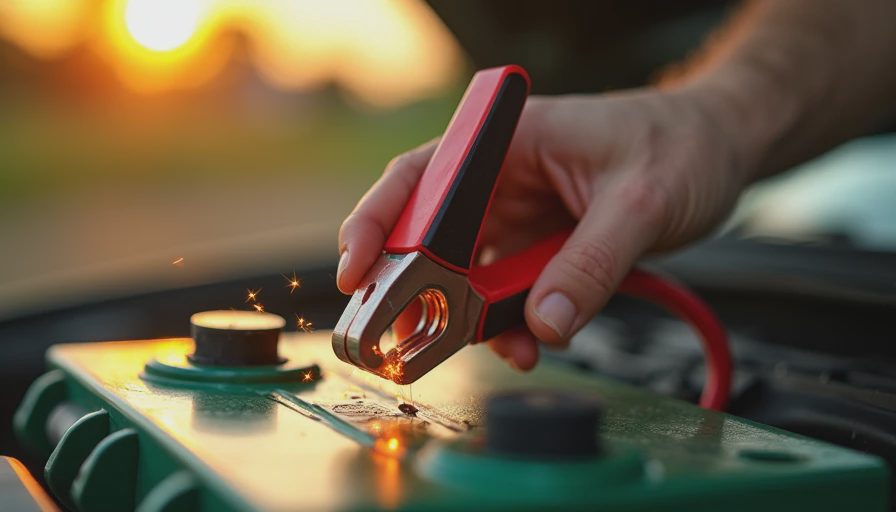
The standard sequence exists for a reason. Positive clamps go on first because they carry the main charging current. The final negative clamp is the one that can spark, so it must always be attached to an unpainted metal bracket or bolt on the dead car, not directly to the negative terminal. That keeps any spark away from hydrogen gas that can collect around a battery.
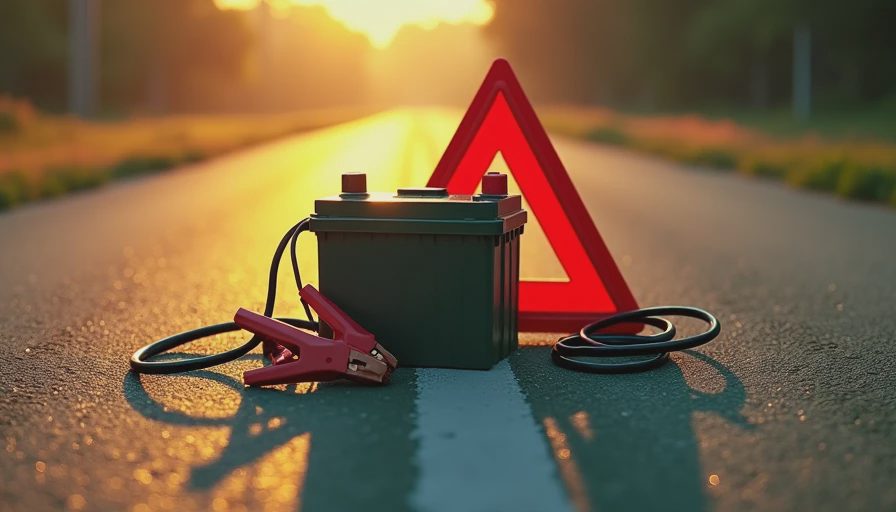
How to Jumpstart a Car, Step by Step
Follow this sequence for any standard 12-volt system.
- Position the donor car close enough that the cables reach without stretching. Do not let the vehicles touch.
- Open both hoods, find the terminals, and identify positive and negative by the plus and minus marks.
- Clamp the red cable to the positive terminal on the dead battery, then clamp the other red end to the positive terminal on the donor battery.
- Clamp the black cable to the negative terminal on the donor battery.
- Clamp the final black end to a clean, unpainted bolt or bracket on the dead car's engine block.
Start the donor car and let it idle for three to five minutes. Then try to start the dead car. If it cranks slowly, let the donor run a few more minutes and try again. Once the dead car starts, remove the cables in reverse order and let the revived car run for at least 15 minutes.
What If It Still Won't Start?
A jumpstart fixes a discharged battery, but not every no-start. If the engine turns over but will not fire, suspect a fuel or ignition problem. If the starter makes a single loud click, the battery may have a dead cell or the terminals may be too corroded. Remove the cables, clean the terminal posts with a wire brush, and recheck the clamps.
If the car still will not crank, look at battery age. A battery over five years old may be done, and a replacement costs $100 to $200 installed. If the dash lights work but the starter clicks, check the ground strap and battery cable connections for a loose bolt.
After the Jumpstart: Let the Battery Recover
Do not shut the engine off right after the jump. The alternator needs time to replace the charge you lost during the starting attempt. Drive for at least 15 to 20 minutes on the highway or a clear road where the engine can hold steady at 1,500 rpm or more. Stop-and-go traffic charges the battery less than steady driving.
If you used a jump pack, put it back on its charger when you get home. Most lithium packs take a few hours to top off, and you do not want to find a dead pack the next time you need it. If you used cables, thank your neighbor and return the cables cleaned and coiled.
If the battery keeps dying after a full drive, it is not the battery's fault. The alternator may have a bad diode, or there is a parasitic drain somewhere in the car. A parts store can check the charging system for free, and that test will tell you whether to replace the alternator or hunt for the drain.
Common Jumpstart Mistakes to Avoid
The most common mistake is connecting the final black clamp directly to the dead battery's negative terminal. It is easier, but it puts a spark right next to a battery that may be venting gas. Use the engine block ground point every time.
Another mistake is turning off the donor car too early. Some modern vehicles have smart alternators that need a few minutes to sense the load and start charging. Let the donor idle for at least three minutes before attempting the dead car.
People also mix up the clamps in low light. Once you know how to jumpstart a car, it is easy to do it in the dark, but the first time, carry a flashlight and check each connection twice.
The Bottom Line
Knowing how to jumpstart a car is only half the repair. The other half is doing it safely, in the right order, and reading what the car tells you afterward. Grab a set of good cables or a jump pack, keep the terminals clean, and you can handle a dead battery in the driveway, the parking lot, or the side of the road.


No comments yet — grab the first one.