Testing car battery with multimeter is one of the fastest ways to separate a weak battery from a charging problem, loose connection, or starter fault. You need a basic digital multimeter, safety glasses, and access to the battery terminals. This test does not replace a professional load test, but it gives useful numbers before you spend $150 or more on a replacement battery.
Work outdoors or in a well-ventilated garage. Turn the ignition off, remove keys from proximity to the vehicle, and switch off lights, radio, blower, and accessories. Do not allow the metal probe tips to touch each other across the battery. A short circuit can damage the meter, melt a tool, or create sparks near battery gas.
Tools, settings, and preparation
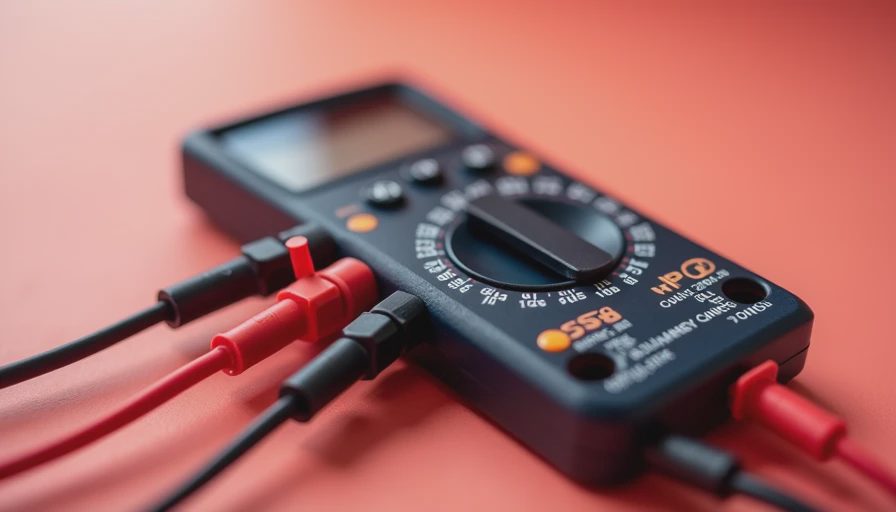
Use a digital multimeter with a DC voltage setting. Many meters have a 20-volt DC range; select that range if the meter is not autoranging. Insert the black lead into COM and the red lead into the port marked V or VΩ. Do not use the amperage port for this test. Connecting the meter across a battery while the red lead is in the amp port can blow the meter fuse or create a dangerous short.
Inspect the battery before measuring. A swollen case, cracked cover, leaking electrolyte, or strong rotten-egg odor is a stop sign. Do not probe a damaged battery. Replace damaged hold-down hardware, clean heavy corrosion, and make sure the terminals are tight. A dirty connection can produce a low reading even when the battery itself is healthy.
If the car was recently driven, let it sit with the engine off for at least 30 minutes. A surface charge can temporarily raise the voltage. For a more useful baseline, turn on the headlights for about 30 seconds, switch them off, and wait another minute before recording the resting voltage.
Measuring resting battery voltage
Testing car battery with multimeter starts at the positive and negative posts, not the cable clamps. Touch the red probe to the positive post, usually marked with a plus sign, and the black probe to the negative post or post terminal. Hold the probes firmly without scraping across the terminals. Record the number to two decimal places.
A fully charged conventional 12-volt automotive battery commonly reads about 12.6 to 12.8 volts after resting. Around 12.4 volts suggests roughly a partially charged battery, while 12.2 volts is significantly discharged. A reading near 12.0 volts indicates a very low state of charge. These figures are clues, not a final health certificate; temperature, battery age, and recent driving affect the result.
If the meter shows zero or a very low number, check probe placement and meter settings first. If the battery reads 12.6 volts but the vehicle still cranks slowly, inspect the cable ends, engine ground strap, starter circuit, and starter motor. Voltage at rest cannot prove that the battery can deliver current under load.
For a battery below about 12.4 volts, charge it with a suitable automotive battery charger before condemning it. Then allow it to rest and repeat the test. A battery that quickly falls back below 12.4 volts after charging deserves a professional conductance or load test.
Checking voltage while cranking
Testing car battery with multimeter during cranking shows how far voltage collapses under starter demand. Disable fuel or ignition according to the vehicle service information so the engine will not start. On many vehicles, removing the fuel pump fuse is straightforward, but modern cars can set fault codes. If you cannot disable starting safely, skip this step and use a parts store or repair shop load test.
Connect the probes to the battery posts, then have an assistant crank the engine for no more than five to ten seconds. Watch the lowest displayed voltage. A healthy, charged battery often stays near or above 9.6 volts at room temperature during cranking. A lower result points toward a weak battery, poor connections, excessive starter draw, or severe cold. Cold temperatures can lower the reading, so compare the result with the manufacturer's specifications when available.
Do not keep repeating crank tests on a discharged battery. Each attempt removes more energy and can overheat the starter. If the engine cranks at normal speed but does not start, battery voltage is probably not the primary problem; move to fuel, spark, immobilizer, or engine-control diagnosis.

Testing the alternator and charging circuit
Testing car battery with multimeter also helps identify an alternator that is not replenishing the battery. Reconnect any fuse removed for the cranking test. Start the engine and let it idle. Place the probes on the battery posts again, keeping hands, wires, and loose clothing away from belts and fans.
Many vehicles show approximately 13.5 to 14.8 volts with the engine running, but smart charging systems can intentionally vary voltage. Some newer cars may show lower voltage at idle and increase output during deceleration or when the battery needs charge. Use the vehicle's service information rather than assuming one number fits every model.
Turn on the headlights, blower motor, rear defroster, and heated seats if equipped. Watch the meter for a minute. The voltage should remain stable enough to support the electrical load. A reading near resting voltage with the engine running suggests an alternator, regulator, belt, fuse, or wiring issue. Excessively high voltage can indicate a regulator problem that risks damaging bulbs, modules, and the battery.
Measure at the alternator output terminal only when the terminal is safely accessible and the service procedure permits it. Comparing alternator-terminal voltage with battery-post voltage can reveal resistance in the positive cable. Do not bridge the alternator terminal to ground with a tool or probe.
Common mistakes and a practical diagnosis
The most common mistake in testing car battery with multimeter is measuring the cable clamps and assuming the battery posts are identical. Test both locations if corrosion is suspected. If the posts show 12.6 volts but the clamps show substantially less, remove, clean, and retighten the connections. A voltage-drop test under load is even better for finding resistance.
Another mistake is replacing a battery immediately after seeing 12.1 volts. That number proves the battery is discharged, not necessarily defective. Charge it fully, let it rest, then repeat the resting and cranking checks. Conversely, a 12.7-volt reading does not guarantee capacity. A weak battery can hold surface voltage and fail as soon as the starter demands current.
Use this sequence: record resting voltage, charge if necessary, repeat the resting test, check cranking voltage, and then check running voltage. If the battery passes but the vehicle still starts poorly, test voltage drop on the positive and ground cables and inspect the starter circuit.
When to replace the battery
Testing car battery with multimeter gives you evidence, but battery age and test results belong together. Many automotive batteries last roughly three to five years, with heat, vibration, deep discharges, and short-trip driving shortening that range. Check the date label and confirm the replacement has the correct group size, terminal layout, reserve capacity, and cold-cranking rating.
A battery that repeatedly fails a charged load test, drops below the cranking specification, or cannot hold voltage overnight is a strong replacement candidate. After installation, secure the hold-down, protect clean terminals with a light battery-terminal coating, and verify that the charging voltage is appropriate. If the new battery goes flat again, stop buying batteries and diagnose the alternator, parasitic draw, or wiring fault.
The value of testing car battery with multimeter is not a single magic number. It is a short diagnostic chain that prevents guesswork: measure the battery at rest, observe it under starter load, verify charging voltage, and inspect the connections. Those four checks can turn a mysterious no-start into a specific repair.




No comments yet — grab the first one.