If you are learning how to disconnect car battery on a daily driver, the job is simple but the order matters. Kill the ignition, gather a 10 mm wrench, and work negative first so you do not turn the wrench into a spark machine. On most cars, the whole task takes about 10 minutes once you know where the hold-down and terminals are. If the battery is swollen, cracked, or leaking, stop there and replace it instead of trying to wrestle it out.
Tools and safety checks
Before you touch a terminal, park on level ground, set the parking brake, and take the key or fob out of the car. Wear safety glasses if the battery is in the engine bay. Acid is not a joke, and a corroded clamp can shed white powder when you loosen it. A 10 mm wrench fits many top-post clamps; 8 mm and 13 mm sockets show up a lot on hold-downs and tray brackets. If the battery sits under a seat or in the trunk, check for a plastic cover and lift ring before you start prying.
This is also the point to decide whether you need a memory saver. A memory saver can keep radio presets, seat positions, and some idle learn values alive, but it is optional. If you do not trust the outlet or OBD-II port you plan to use, skip it and plan to reset the clock later.
How to disconnect car battery without losing your settings
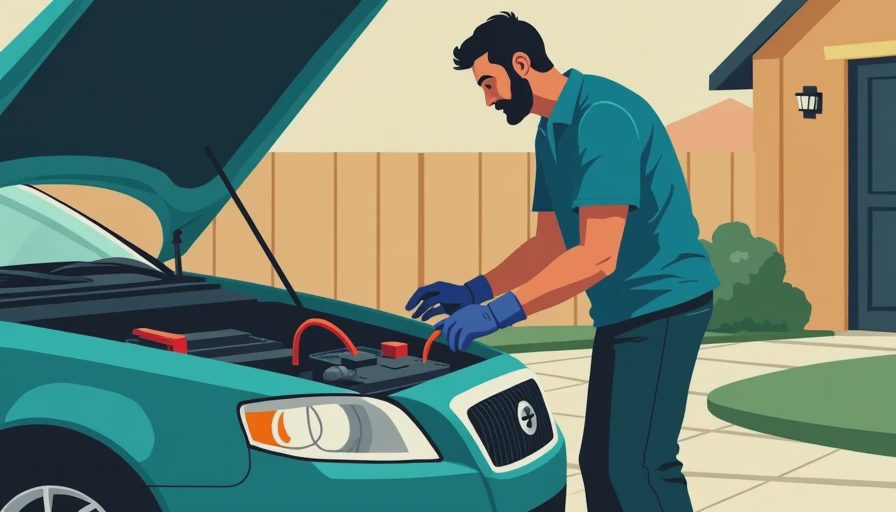
When people ask how to disconnect car battery without drama, the main rule is simple: remove the negative cable first. The negative post is usually marked with a minus sign and often has a black cable. Loosen the clamp nut just enough to slide the terminal off, then tuck the cable away so it cannot spring back and touch the post.
Once the ground is isolated, move to the positive cable. The positive post usually has a red cover or a plus sign. If the clamp is stuck, wiggle it with a battery terminal puller or work it gently side to side; do not hammer on the post. After both cables are free, remove the hold-down bracket or J-bolt and lift the battery out with both hands. A group 35 or group 24 battery can weigh 35 to 50 pounds, so use good body position instead of one-handed yanking.
Procedure at the terminals
The actual sequence matters more than muscle. If you are still wondering how to disconnect car battery safely on a modern car, start by loosening the negative terminal with the wrench still clear of the body sheet metal. Once it lifts free, secure it with a rag or tape so it cannot flop back. Then disconnect the positive cable. Cover the exposed positive terminal with a rag if the battery will remain in the car for a while.
If the battery is in a tight tray, remove the hold-down only after both cables are off. Many cars use a simple J-hook, a side clamp, or a top plate held by a 10 mm or 13 mm bolt. Keep track of the hardware in a magnetic tray or a cup, because one missing bracket can become a rattle later. If corrosion is heavy, neutralize it with baking soda and water after the battery is out, then wipe the tray dry before reinstalling anything.
What changes after power is off
Once the battery is out, the car is not dead in every sense. Some modules hold charge for a few minutes, and others lose settings right away. Radio presets, auto-up windows, steering angle calibration, and clock settings are common casualties. On some late-model vehicles, the throttle body or transmission can take a short relearn drive after reconnection. That is normal.
If you disconnected the battery to do starter, alternator, or parasitic draw testing, leave the posts clean and inspect the cables before you reinstall. A swollen terminal, green corrosion under the insulation, or a frayed ground strap is a warning sign. Replacing a $12 terminal clamp now is cheaper than chasing a no-start later.
Common pitfalls that cause sparks or resets
The most common mistake is removing the positive cable first while the wrench is still close to ground. That is how a clean job turns into a spark and a blown fusible link. Another mistake is letting the loose wrench rest across both posts or between the positive terminal and body metal. Keep one hand free to steady the wrench and do not rush the last quarter-turn.
Another problem shows up when a driver tries how to disconnect car battery with the engine running. Do not do that on a modern vehicle unless a factory procedure specifically calls for it. Voltage spikes can hurt modules, and the alternator does not like being unplugged under load. If the battery is corroded shut or the clamp is rounded off, stop and get the right tool instead of forcing it with pliers. A stripped terminal costs more time than a new wrench.

When you should hand the job off
If the battery is under a seat, buried under an intake plenum, or tied into a start-stop system with a battery monitoring sensor on the negative cable, take a minute to read the service procedure. European cars and newer trucks may need a battery registration step after replacement. If you are not sure whether your car has that requirement, note the year, make, model, and engine code before you disconnect anything.
That is the practical answer to how to disconnect car battery without creating extra work. Use the right wrench, pull the negative first, keep the cables isolated, and remember the order when you put it back together: positive first, negative last. If the job turns into a fight, that is usually a sign that the battery, the terminals, or the tray needs attention before the next start.




No comments yet — grab the first one.