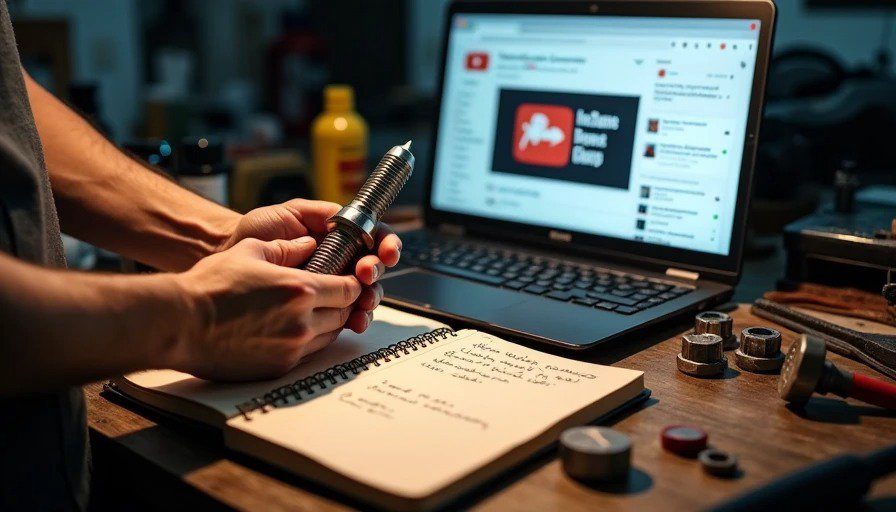
If you're reading this, you already know what it feels like to be three hours into a repair, staring at a bolt that doesn't match the YouTube video, scrolling through page six of a forum thread that starts in 2012 and ends with "never mind, figured it out" and no explanation.
You know what it feels like to finally solve it — the click of the torque wrench at the right spec, the engine firing up smooth, the satisfaction of diagnosing something the dealer quoted $1,800 to fix — and then realizing that hard-won knowledge is going to live in your head, maybe a greasy notebook, and nowhere else.
That's why we built TorquePedia.
What We're Building

TorquePedia is a crowd-built automotive knowledge base. Think of it as Wikipedia's structure and rigor meets Stack Overflow's reputation system, built specifically for people who fix their own cars — whether that's a valve cover gasket at midnight or a full engine-out rebuild over a winter.
Every entry on this site follows a structured format:
Symptom → Diagnosis → Tools Required → Procedure → Torque Specs → Common Pitfalls → Contributors
No fluff. No speculation. No "my buddy says." Just the actual procedure, signed by the person who did the work.
Why We're Different
The internet already has forums. It has Reddit. It has YouTube. Here's what TorquePedia offers that none of those do:
Forums | YouTube | TorquePedia | ||
|---|---|---|---|---|
Editable & versioned | ❌ | ❌ | ❌ | ✅ |
Permanent contributor credit | ❌ | ❌ | ❌ | ✅ |
Structured, searchable format | ❌ | ❌ | ❌ | ✅ |
Peer-reviewed by reputation | ❌ | ❌ | ❌ | ✅ |
Knowledge that doesn't decay.
A forum thread is a firehose — good luck finding the answer on page fourteen. A Reddit thread is ephemeral — six months later it's archived and forgotten. A YouTube video skips the step that took you three hours to figure out.
TorquePedia entries are living documents. They get better over time. Someone adds a torque spec you missed. Someone else flags a safety concern. A third person verifies it against the factory manual. The entry evolves, and every contributor's name stays attached to their work.
Your name, on your knowledge.
This is the core promise of TorquePedia: every contribution carries your name permanently. Not a username that gets forgotten. Not a thread that scrolls off the front page. Your name is attached to the entry, in the contributor log, forever.
If you write the definitive guide to replacing a Honda K-series timing chain, your name lives on that guide. If you correct a torque spec on a BMW N54 valve cover gasket, your name sits in the edit history. If you catch a dangerous shortcut in a brake job entry, your name is there — and you just saved someone's life.
That matters.
How It Works

The Reputation System
We don't have paid moderators. We don't have editors sitting in an office approving every change. We have you — the community — and a reputation system that gates permissions by trustworthiness.
New members can submit entries. They land in a review queue.
Active contributors earn the ability to edit directly.
High-reputation members gain arbitration privileges for disputes.
The system polices itself. If someone submits bad information, the community corrects it. If someone vandalizes an entry, anyone with sufficient reputation can revert it. The people who built the knowledge protect the knowledge.
The Entry Template
Every Manual entry follows a strict template. This isn't for bureaucracy — it's because when you're under a car at 11 PM with a flashlight in your teeth, you don't want to read a story. You want the steps. You want the torque values. You want the common pitfalls.
The Boards
We organized the site into six boards, each serving a specific purpose:
Board | Purpose |
|---|---|
The Manual | Step-by-step repair and maintenance procedures |
The Codex | Technical reference: DTCs, wiring specs, fluid charts, part numbers |
Tool Bench | Tool evaluations, shop equipment, safety gear |
Garage Log | Project journals, introductions, "today I learned" |
Make/Model | Vehicle-specific knowledge: known issues, buyer's guides, model-year changes |
The Edit Bay | Meta-discussion: editorial standards, disputes, content requests |
Each board has its own tone. The Manual is procedural and precise. The Garage Log is where the stories live — the project that took two years, the mistake you made three times, the tool that changed everything.
But across all boards, one rule applies: cite what you know, flag what you don't, and sign your work.
Who This Is For
This site is for the person who:
Owns a floor jack and a torque wrench and uses both regularly
Has spent at least one night searching for a bolt dropped behind the intake manifold
Keeps notes — digital or on greasy notepads — and believes that writing down what you learned is part of finishing the job
Wants their hard-won knowledge to outlive a forum thread on page seven
We're not here for the people who want to argue about which oil brand is "best." We're here for the people who know that the torque spec for a specific bolt on a specific engine in a specific year is actually different from what the generic chart says — and they're willing to write it down.
Your First Contribution
If you're reading this and thinking "I want to contribute, but I don't know if I know enough" — stop.
If you've fixed one thing on one car, you know enough.
You don't need to be a master technician. You don't need to have written a factory service manual. You just need to have done the work, paid attention, and be willing to share what you learned.
Here's how to start:
Browse the existing entries. See what's missing. See what could be better.
Pick something you know. A repair you've done. A code you've diagnosed. A tool you've used.
Write it up. Use the template. Include the details that took you three hours to figure out.
Submit it. If you're new, it goes to review. If you've earned edit permissions, publish it directly.
Stay in the conversation. Someone might ask a clarifying question. Someone might add a correction. That's how entries get better.
And if you don't know where to start? Head over to The Edit Bay. There's a "Help Wanted" thread with specific content requests. Pick one and run with it.
What's Next
This is day one.
Right now, we have a handful of seed entries — enough to show you what we're building, not enough to pretend we're finished. The real work starts when you start contributing.
Over the coming weeks and months, we'll:
Refine the editorial standards based on what the community needs
Add more structure to the Make/Model board as entries accumulate
Build out the reputation system based on real usage
Keep the conversation going in The Edit Bay
But the most important thing that happens next is you write something.


No comments yet — grab the first one.