If your automatic transmission is shifting hard or your manual gearbox is noisier than it used to, the fluid inside the housing is the first suspect. Learning how to replace transmission oil at home is one of the best weekend projects for a DIYer with basic hand tools, a floor jack, and a drain pan. A shop will charge $150 to $300 for this job, but the parts and fluid usually cost $50 to $120 depending on your vehicle. With about an hour of garage time, you can replace transmission oil and know exactly what is going into your car.
Why You Should Replace Transmission Oil on Schedule
Clean fluid lubricates gears, transfers power, and carries heat away. Over time, heat and friction break down additives, and the fluid picks up metal particles. That leads to harsh shifts, slipping, and wear that usually ends in a rebuild. Manufacturers suggest service intervals between 30,000 and 60,000 miles, but towing and stop-and-go traffic shorten that window. If the fluid smells burnt or looks dark, it is past time to act. Stay on schedule, and you can replace transmission oil before a $200 maintenance job becomes a $2,000 repair.
Tools and Parts You'll Need
Most cars need a floor jack, jack stands, a socket set, a drain pan, and a funnel that fits the fill plug. You also need the correct fluid. Automatics take ATF like Dexron VI or Mercon V; manuals take GL-4 or GL-5 gear oil like 75W-90. Check the owner's manual because wrong fluid is worse than no change. You will also need a new drain plug washer and a torque wrench. Auto parts stores list the fluid type by year, make, and model.
Step-by-Step: How to Replace Transmission Oil
The goal is to drain the old fluid, replace any filter or pan gasket, refill with the correct amount, and check the level at the right temperature.
Park on level ground and let the engine cool unless the procedure says to warm the transmission. Loosen the fill plug or dipstick tube before opening the drain plug so you are not stuck with an empty case.
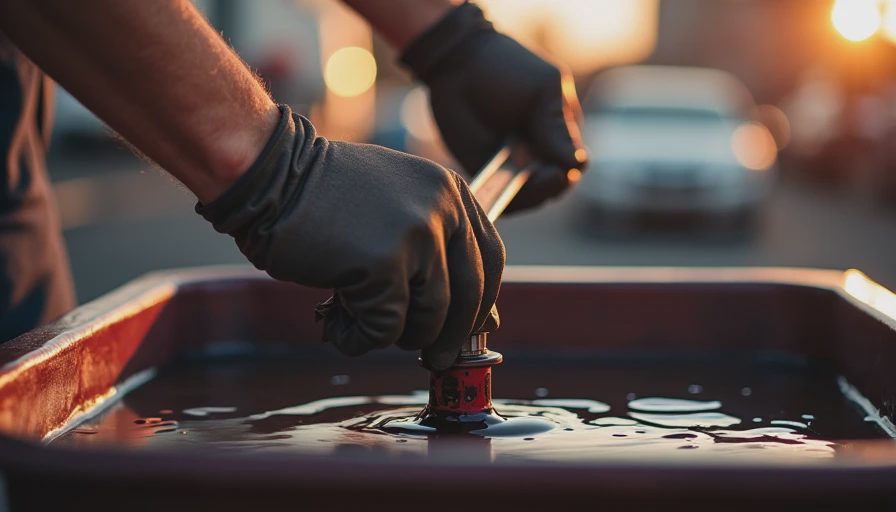
Put a drain pan under the transmission and remove the drain plug slowly. Inspect the old fluid for metal shavings. If you see chunks, a rebuild may be coming. Once drained, replace the washer, reinstall the plug, and torque it to spec. Many imports call for 25 to 35 foot-pounds, but check your manual.
If your car has a pan and filter, drop the pan, replace the filter, and reinstall with a new gasket. Tighten in the torque pattern from the manual. Then refill through the fill plug or dipstick tube. The distance between low and full on the dipstick can be one quart, so add a little at a time.
Start the engine, run it through the gears, and check the level with the engine at operating temperature. Top off if needed. If the fluid still looks dark after a short drive, do a second drain-and-refill to dilute the old oil.
Common Mistakes When You Replace Transmission Oil
The most common mistake is choosing the wrong fluid. A manual transmission that calls for 75W-90 GL-5 will not work with Dexron VI, and an automatic may slip with a universal fluid. Overfilling is next; too much fluid creates foam and can blow out seals. Another mistake is ignoring a stripped fill plug. Use the correct socket, and spray it with penetrating oil beforehand. Finally, resist the urge to skip the torque wrench. Too tight cracks the pan, too loose leaks. When you replace transmission oil, give yourself fifteen extra minutes to double-check every plug and gasket.

Transmission Oil vs. Fluid: What's the Difference?
A lot of car owners type 'replace transmission oil' and mean automatic transmission fluid. Most modern automatics use ATF, a highly refined oil with additives that handle high temperatures. Manuals and differentials use thicker gear oil. Newer cars with a CVT or dual-clutch gearbox have their own special fluid. The term 'transmission oil' is fine for conversation, but the bottle you pour in must match the spec in your owner's manual. The wrong fluid will make itself known immediately, and the repair bill will be much larger.
How to Check the Level Without Making a Mess
An accurate level check matters more than a perfect drain. Park on level ground, keep the engine running if your owner's manual says so, and pull the dipstick, wipe it, then reinsert it. Read the hot mark, not the cold one, because automatic transmission fluid expands with heat. For manual transmissions with a fill plug, the level is correct when fluid trickles out of the hole while the car is level. Checking twice is worth the extra minute, especially after you finish a fresh fill. A low level can cause slipping and a high level can cause foaming, so treat this last step as seriously as the drain.
Final Tips for a Clean Transmission Oil Change
Label the fluid bottles with the date and mileage, and log the job in the TorquePedia garage log. Take old fluid to an auto parts store or recycling center; never pour it down a drain. If your car has an extended warranty, a documented fluid change with the right spec usually keeps coverage intact. If the job feels messy, a local shop will charge $150 to $300 in labor, but supplying your own fluid still saves money. The whole project is repeatable every 30,000 to 60,000 miles, and each time it goes faster.





No comments yet — grab the first one.