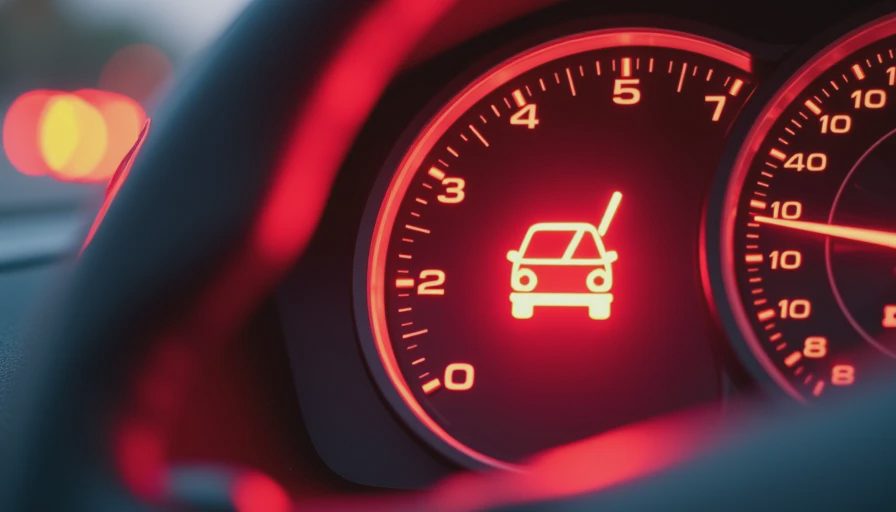
A flashing check engine light is not the same thing as a steady one, and that difference matters. A steady light often points to an emissions fault or a stored code you can schedule around. A flashing check engine light usually means the engine is misfiring hard enough that unburned fuel can overheat the catalytic converter. If the car is shaking, lacking power, or smelling like raw fuel, shut it down quickly and avoid turning a small ignition issue into a four-figure repair. If you carry roadside assistance, this is a good time to use it for a tow instead of gambling on one more mile.
What the flashing light is telling you
Most of the time, the computer is seeing a misfire on one or more cylinders. That can come from worn spark plugs, a weak coil, a bad plug wire on older cars, vacuum leaks, low fuel pressure, or an injector that is not doing its job. On some engines, oil in the plug well or a cracked coil boot can create the same symptom. A loose gas cap can turn on the check engine light, but it does not usually cause a flashing check engine light. That is why the flash is treated as a load-bearing warning, not a “see if it clears tomorrow” message.
The easiest way to separate a nuisance code from a real drivability problem is to look at what the car is doing. If the idle is rough, the exhaust note is uneven, and acceleration feels flat, assume you are dealing with a true misfire until proven otherwise. Modern engines will often log P0300 for random misfire or P0301 through P0308 for a cylinder-specific fault. Those codes do not name the exact failed part, but they point you at the right bank or cylinder.
First tests you can do in the driveway
Start with the basics before you buy anything. Open the hood and check for a loose intake tube, split vacuum hose, disconnected MAF sensor plug, or oil-soaked coil boot. If the car still runs, listen for a sharp ticking leak or a hissing sound around the intake manifold. Pull the spark plugs if they are due anyway, because a plug with wide gap, worn electrodes, or heavy carbon can trigger the same complaint. On many four-cylinder and V6 engines, plugs that are 60,000 to 100,000 miles old are already past their easy life.
If you have an OBD-II scanner, read the code before clearing anything. A basic scanner from Innova, Autel, or BlueDriver is enough for a driveway job, and many parts stores will read codes for free. Write down freeze-frame data if the tool shows it, because engine speed, load, and coolant temperature help you spot a pattern. A code alone does not prove a bad coil. Swapping the suspected coil with another cylinder and seeing whether the misfire follows is a smarter test than throwing parts at it.

Diagnosis order that saves time and money
When I work through a misfire, I follow a simple order: codes first, visual inspection second, plug and coil check third, fuel and air next, then compression if the easy stuff does not solve it. That order keeps you from replacing a perfectly good fuel injector when the real problem is a cracked spark plug insulator. On coil-on-plug engines, one bad coil is common, and the part itself is often cheaper than the labor you would spend guessing. On a lot of domestic and import cars, a single coil runs roughly $40 to $120, while OEM plugs might be $8 to $25 each.
If the misfire only shows up under load, test it on a safe road with a scanner that can show live misfire data. If it happens at idle and clears when you rev it slightly, vacuum leaks climb higher on the list. If fuel trims are heavily positive, the engine is running lean and may be chasing air or fuel delivery issues. If the plugs look good and the coils swap clean, then a compression test or leakdown test is the next honest move. That is where a real mechanical fault, like a burned valve or a tired head gasket, stops pretending to be an ignition problem.
What not to do when it happens on the road
Do not keep your foot buried in it just to get home. A hard misfire sends raw fuel into the exhaust, and that can overheat the converter fast. If the car is bucking, losing power, or the light is flashing check engine light style at highway speed, back out of the throttle, find a safe place to pull over, and decide whether it is tow time. If the engine is running smoothly enough to move the car a short distance, drive it gently and keep RPM low. If it is shaking badly, park it.
This is also the moment to check your paperwork. Many policies offer roadside assistance as an add-on, and it can be worth far more than the small annual premium if you need a flatbed at 9 p.m. A tow is cheaper than a converter, and a damaged converter is cheaper to avoid than to explain later.
When to stop DIY and hand it to a shop
If you have swapped plugs and coils, verified the wiring, and the code keeps returning, a shop diagnosis is the right call. Expect a diagnostic charge in the rough range of $100 to $180 at many independent shops, with dealer labor usually higher. A simple ignition repair might land in the $150 to $400 range once parts and labor are added. If the problem has already damaged the catalytic converter, the bill can jump to $1,200 to $2,500 or more on some vehicles, especially if OEM parts are required.
That is why a flashing check engine light is one of the few warnings where fast action saves real money. A driver who shuts it down early often walks away with a plug set, a coil, or a vacuum hose. A driver who keeps going may buy an exhaust repair too. If your engine has a known coil issue, misfire history, or old plugs, fix that maintenance now instead of waiting for the next roadside surprise. The cheapest repair is still the one that keeps the light from flashing in the first place.
How coverage can soften the bill
Not every breakdown is a repair-only problem. If the car needs a tow, roadside assistance coverage can take one headache off your plate. If the repair shop needs a day or two to finish the job, rental reimbursement coverage can help with transportation while the car sits. Those add-ons are not magic, but they make a rough night less expensive when a flashing check engine light turns a normal commute into an unplanned stop.
If you are comparing policies or reviewing what you already carry, check whether towing, labor, and rental benefits are included before you need them. That is the whole point of buying protection in advance: when the warning light starts flashing, you already know who pays for the tow and what you are responsible for next.




No comments yet — grab the first one.